A well-chosen rug does more than soften a room. It helps define a space, bring furniture together and add warmth, texture and personality to your home.
But finding the right rug involves more than choosing a colour or pattern you love. Size, placement, material and how you use a room all play a part.
Whether you're furnishing a living room, refreshing your bedroom or adding a little warmth to an entryway, here's what to consider before choosing your next rug.
1. Living Room: Give Your Furniture Room to Breathe
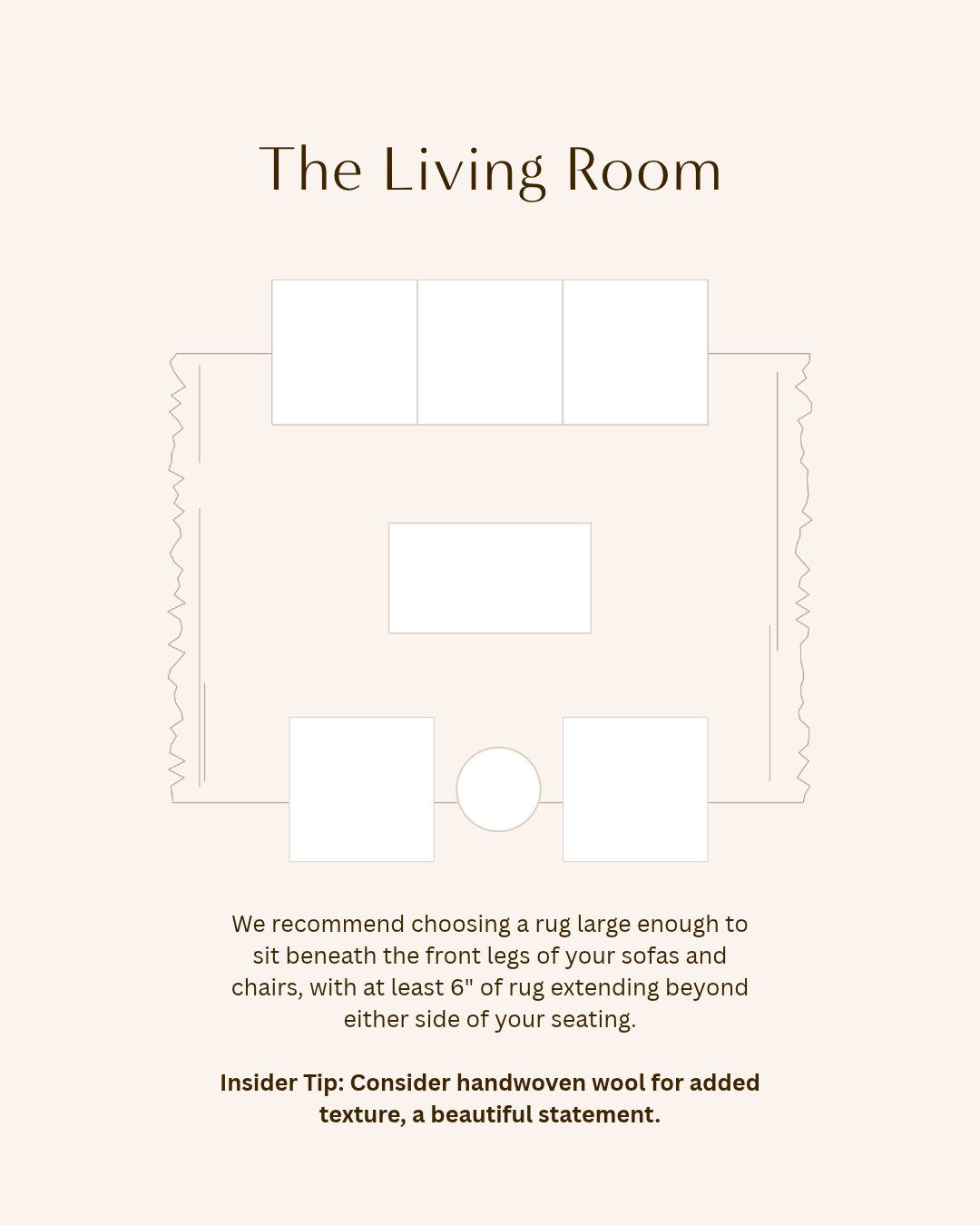
One of the most common rug-sizing mistakes is choosing a rug that's too small. A rug should help anchor your seating area rather than look like it's floating in the middle of the room.
As a general rule, choose a rug large enough to accommodate the front legs of your sofas and chairs. Ideally, allow at least 6 inches of rug to extend beyond either side of your seating arrangement.
For a more generous look, consider a rug large enough to fit all the furniture legs. This creates a more cohesive, grounded feel.
Insider Tip: Handwoven wool rugs are a beautiful choice for living spaces. Their natural texture, subtle variations and luxurious feel add warmth and character.
2. Dining Room: Make Room for the Chairs
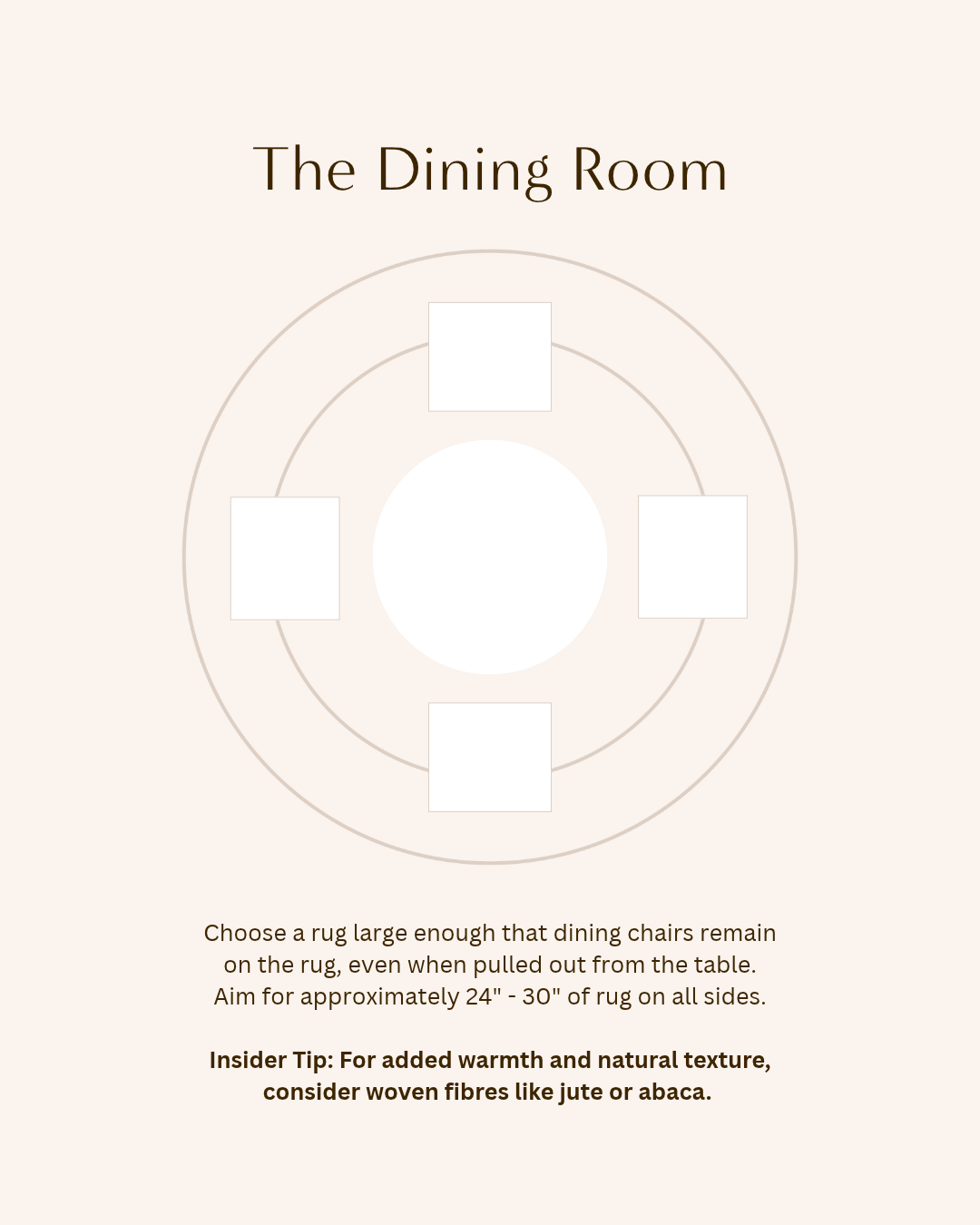
A dining room rug needs to accommodate more than just the table. Consider how much room your chairs need when pulled out, too.
Ideally, choose a rug that extends approximately 24–30 inches beyond the edges of your dining table. This allows chairs to remain on the rug when pulled out, rather than catching on the edge.
Before purchasing, measure your table with the chairs pulled out to make sure the rug will comfortably accommodate the entire arrangement.
Insider Tip: For added warmth and natural texture, consider woven fibres like jute or abaca. Their organic finishes work beautifully in dining spaces. Just keep in mind that natural plant fibres are less forgiving of spills and moisture.
3. Bedroom: Step Into Something Soft
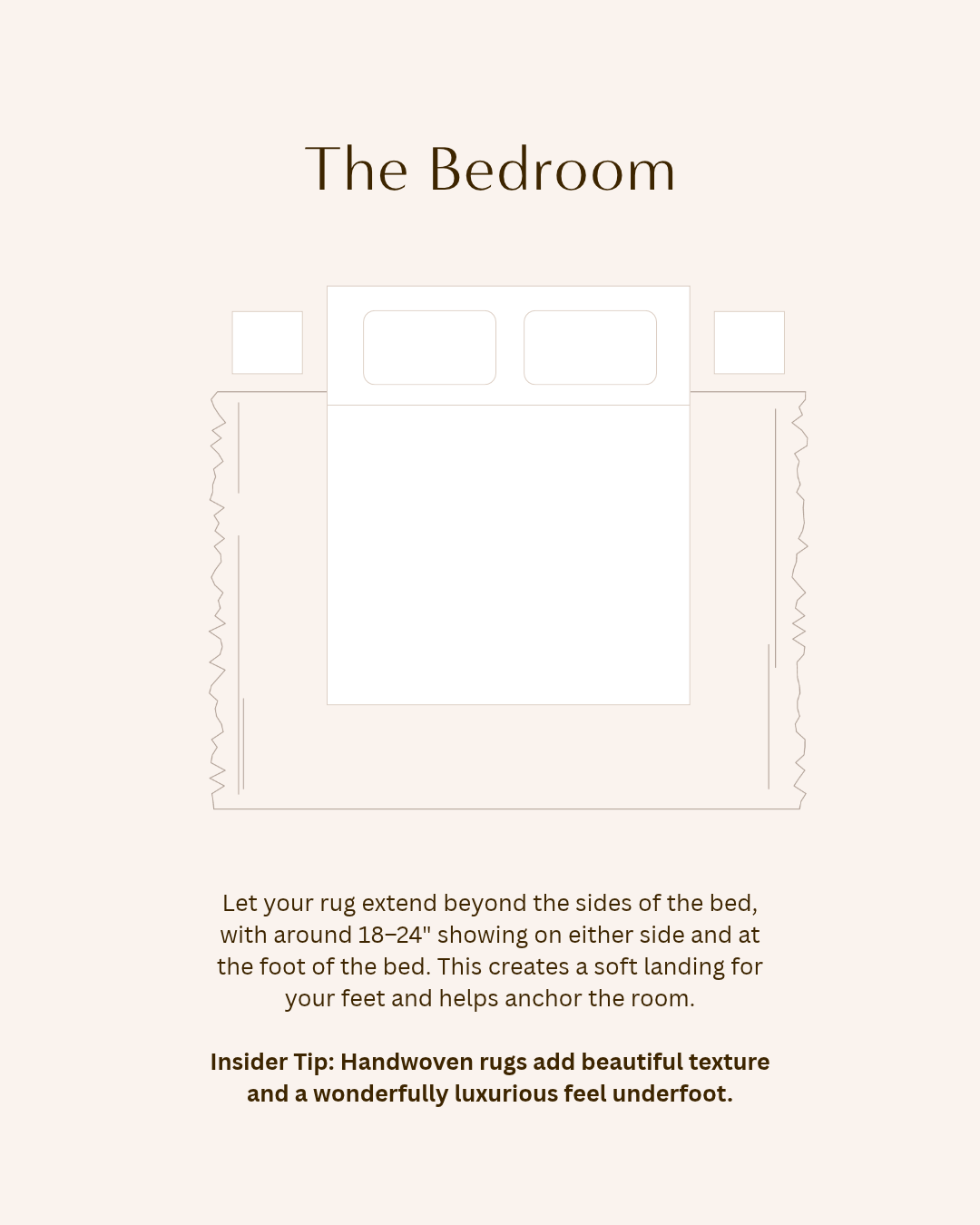
A bedroom rug should feel like a soft landing at the start and end of your day.
For a balanced look, choose a rug that extends beyond the sides and foot of your bed. Aim for approximately 18–24 inches of visible rug on either side, depending on the size of your room.
A large area rug placed beneath the bed is a lovely way to anchor the space, while smaller runners on either side can work well in more compact bedrooms.
Insider Tip: Handwoven rugs add beautiful texture and a wonderfully luxurious feel underfoot.
4. Hallways: Make the Most of a Narrow Space
Hallways and narrow passages are ideal places for runners. They introduce warmth, soften hard flooring and help create a natural sense of flow between rooms.
Choose a runner that leaves a visible border of flooring along either side. The right proportions will make the hallway feel considered rather than crowded.
Insider Tip: Flatweave rugs are a practical choice for high-traffic areas. Their low-profile construction makes them durable and easy to maintain.
5. Entryway: Make a First Impression
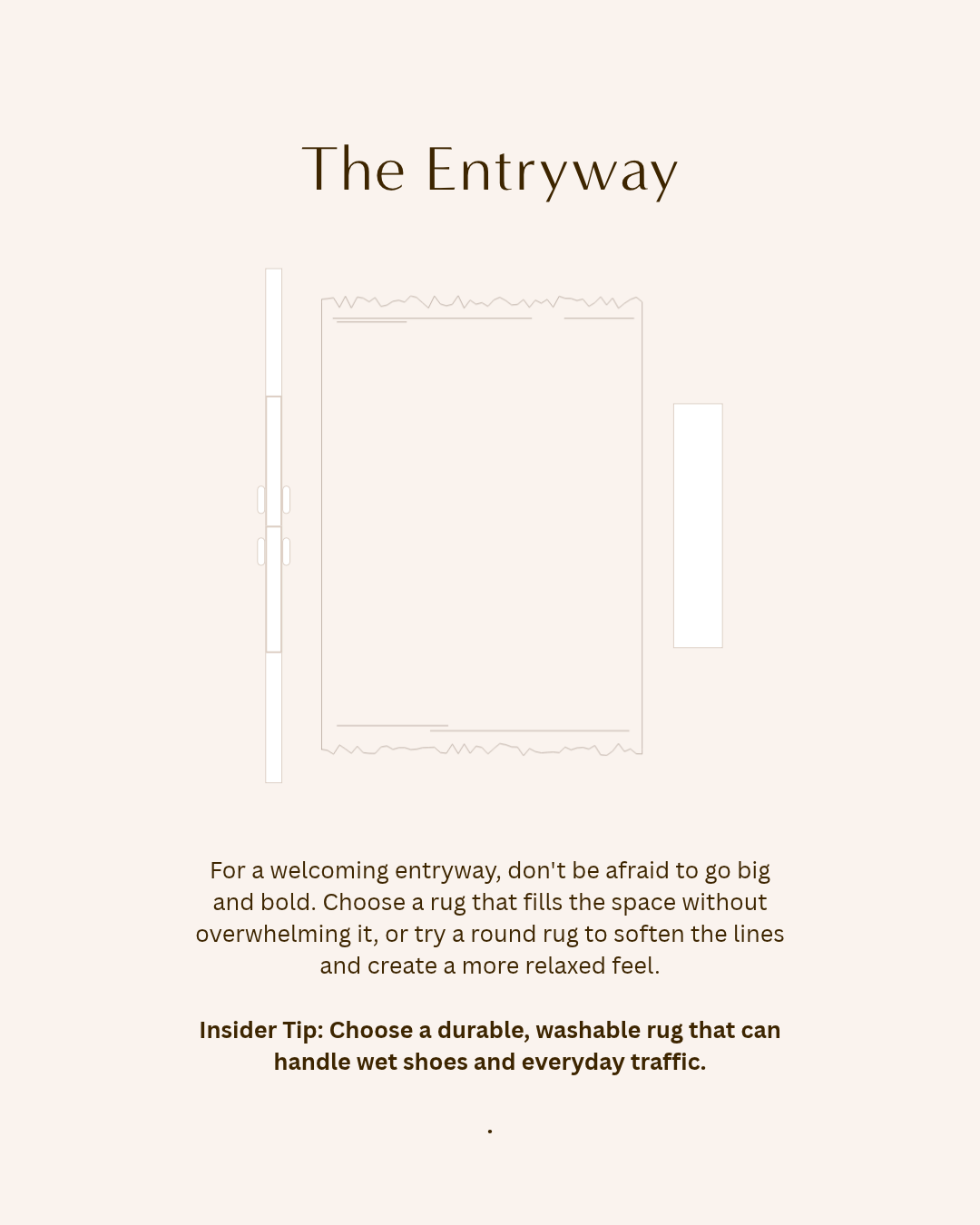
Your entryway is the first space guests see when they walk through the door, so don't be afraid to make a statement.
A generously sized rectangular rug can help define the space, while a round rug can soften the lines and create a more relaxed feel. Choose a size that complements the entryway without obstructing the natural walking path.
In rainy climates, material matters just as much as appearance. Look for low-pile, washable or indoor-outdoor rugs that can handle everyday foot traffic, wet shoes and the occasional muddy footprint.
Insider Tip: Choose a durable, washable rug that can handle wet shoes and everyday traffic.
6. Kitchen: Practical Can Still Be Beautiful
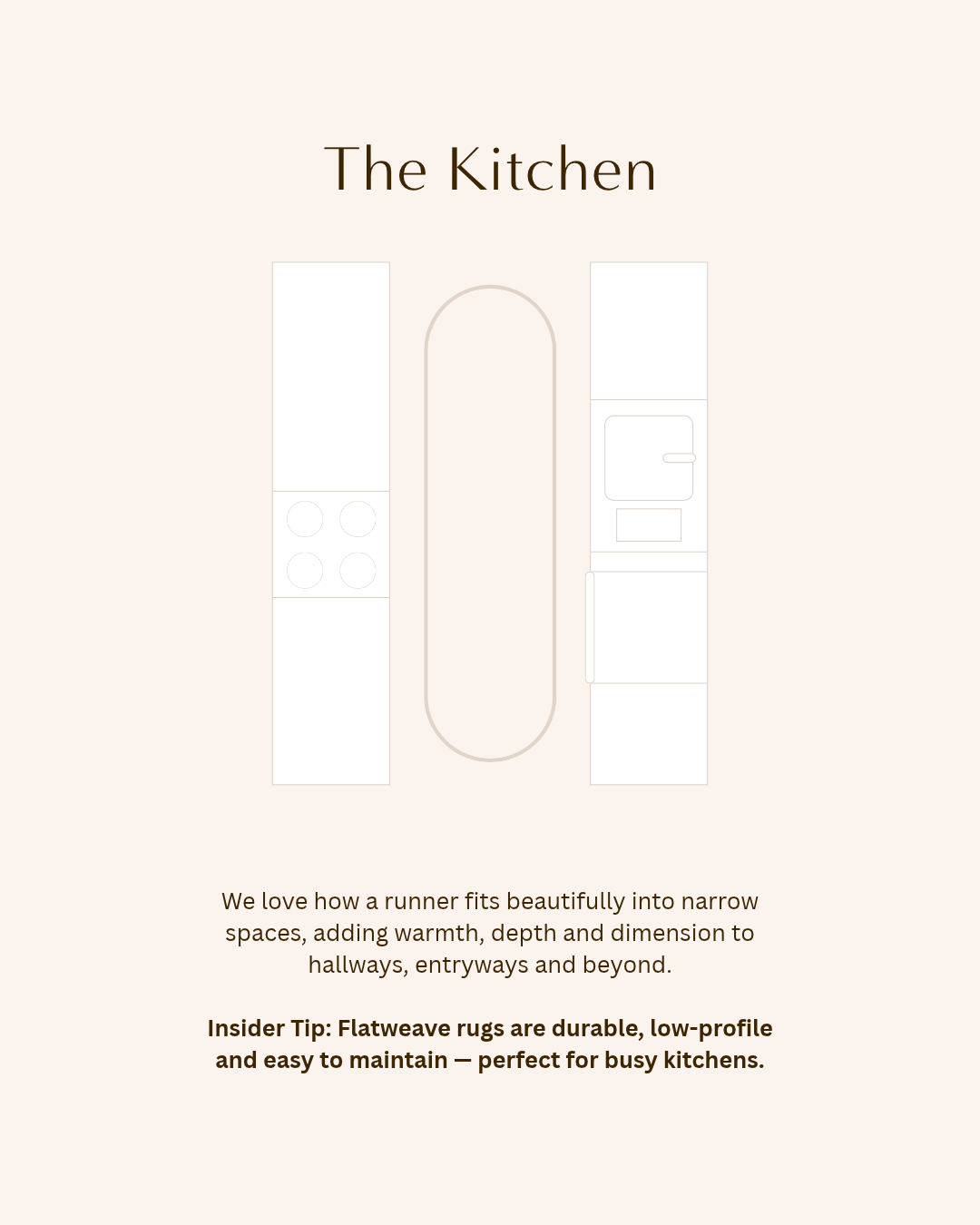
Kitchens are busy spaces, but that doesn't mean they have to be without warmth and texture.
A runner along an island or a smaller rug in front of the sink can soften hard flooring and make the space feel more inviting.
Look for flatweave or low-pile designs that are easy to clean and won't become a tripping hazard. Washable options are particularly useful in areas prone to spills and splashes.
Insider Tip: Flatweave rugs are durable, low-profile and easy to maintain — perfect for busy kitchens.
Choosing the Right Rug Material
Once you've settled on size and placement, consider how the rug will be used. Different fibres offer different benefits, and the right choice depends on your lifestyle.
Wool: Naturally resilient, soft underfoot and a beautiful choice for living rooms and bedrooms. Wool rugs still require appropriate care and prompt attention to spills.
Jute: A natural plant fibre with a relaxed, organic texture. Best suited to relatively dry areas where spills are less likely.
Abaca: A strong natural fibre with a structured woven appearance, ideal for adding organic texture.
Cotton: Lightweight and often easy to wash, depending on construction and care instructions.
Synthetic fibres: Materials such as polypropylene offer practical options for busy households, particularly in entryways and other high-traffic spaces.
Indoor/outdoor materials: Designed with greater resistance to moisture and everyday wear, making them useful for entryways, patios and covered outdoor spaces.
Always check the manufacturer's care instructions before cleaning or washing a rug.
A Few Things to Consider Before Buying
Before settling on a rug, keep these practical details in mind:
Measure first. Mark out the intended rug dimensions on your floor using painter's tape. This gives you a much better sense of how it will look and fit.
Consider the door clearance. Make sure the rug doesn't interfere with doors opening and closing.
Think about maintenance. Consider the amount of foot traffic, likelihood of spills and how much upkeep you're comfortable with.
Use a rug pad. A suitable non-slip rug pad helps keep your rug in place, adds cushioning and can protect your flooring.
Don't forget proportion. A rug should complement the furniture and the room, not overwhelm it or leave the space feeling disconnected.
The Finishing Touch
The right rug can completely change how a room feels. It can bring furniture together, introduce natural texture, soften hard surfaces and make a house feel more like home.
Take the time to consider how you use each space, choose materials that suit your lifestyle and don't be afraid to go a little bigger when it comes to sizing.
At Furniture 28, we believe in choosing thoughtfully, investing in pieces you'll love and creating spaces that feel like home.
Buy Less. Choose Well.